Featured Blog

Featured Blog

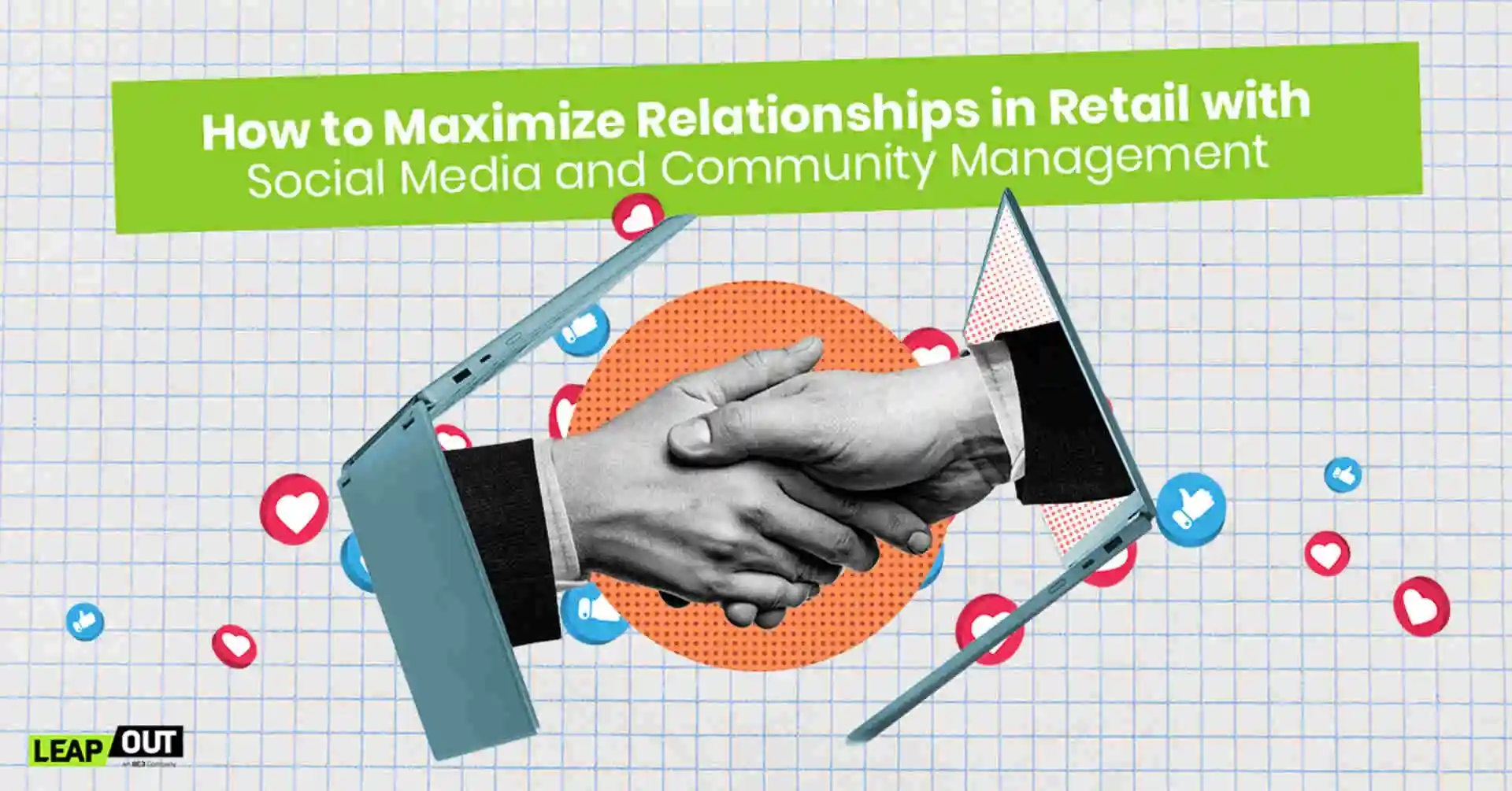
How to Maximize Customer Relationships in Retail with Social Media and Community Management

Social media marketing has become a primary mode of communication in the digital age. While it has become a go-to channel for young individuals, it also has become an indispensable tool for e-commerce and businesses in other industries.  This digital marketing channel can establish a unique connection between businesses and their target audiences on a personal level. This enables companies to foster trust and loyalty.  Moreover, companies, through customer engagement, can establish a strong emotional bond beyond mere cold and formal business transactions. You can address further their concerns while showcasing your brand personality through community management. Business Benefits of Social Media  Because of its unique capabilities, social media has a special place in marketing your business online. Here are some benefits that your company can enjoy: Increased Sales and Revenue A popular digital marketing channel, social networks can bring tons of benefits to your business. Aside from driving traffic to your website, it is also a platform to convince your target customers to buy your products using engaging content. Lower Customer Acquisition Costs (CAC) Organic social combined with targeted social ads are usually more cost effective than traditional marketing channels when attracting new customers. Over time, this translates to lower customer acquisition costs, boosting your profit margin. Higher Customer Lifetime Value (CLV) In fostering strong customer relationships, social media is your best gateway. Nurtured leads become loyal customers who buy repeatedly and may even become brand advocates, increasing their CLV. Improved Brand Reputation Authentic interactions on social media enhance your brand image. Positive responses, helpful content, and social responsibility initiatives all contribute to trust and increase the overall value of your brand. Amplified Reach at Lower Cost Sharing quality organic content and strategically boosting it with paid advertising can cost significantly less than traditional marketing for reaching the same-sized audience. Aligning Your Social Media Campaigns with Business Goals As an online retailer, investing in social media can be your ticket for better sales. However, not all companies have earned a decent or impressive ROI (return on investment) from this activity.  Why? Because many companies do not align their social media efforts with the right business goals. Some concentrate too much on creativity that they forget to lead their customers to  According to Marley Jaxx, a filmmaker and YouTube content creator, a major reason could be businesses target the wrong business goals. Marley said in one of her YouTube videos that most companies are not paying attention to accomplishing three sequential business goals:  Lead Generation Lead Nurturing Lead Conversion Let’s explore them one after another and discover strategies and tactics to carry out per goal.  Lead generation Your goal in the lead generation phase is to generate interest in your product or service from your target audience. At this phase, you are attracting the interest of your prospective customers through clever and creative digital content strategies. Here are some ideas to turn your audience into leads. Captivate your audience with lead magnet offers like early access to your new products, discounts, or coupons to attract your customers that they can’t resist. Showcase authentic testimonials from satisfied customers. Form strategic influencer partnerships in your industry. Position your brand as a thought leader by fostering community engagement. Launch a referral campaign to leverage word-of-mouth marketing. Gain valuable insights into your audience’s preferences, pain points, and industry trends. Empower your team to become brand advocates on your social networks. Lead nurturing Nurturing your leads solidifies your relationships with potential customers by consistently engaging with them through different channels. You can do this by providing valuable and relevant content. Here are some tips to level up your relationship with them through social media. Develop a robust content ecosystem that nurtures leads. Foster meaningful connections through active engagement with your audience on their preferred social media platforms. Implement a lead scoring system to prioritize and segment your leads based on their engagement, demographics, and behavior. Lead conversion In social media, lead conversion is the transformation of casual audience or followers into buyers or subscribers. Boost high-performing social media posts with paid advertising. Incorporate popular and relevant hashtags into your social media content. Leverage the power of user-generated content to build trust and social proof. Incorporate shop buttons or links within your social media posts and profiles to streamline the path from discovery to conversion. Create a branded Facebook group to foster a dedicated community of engaged prospects and customers. Actively participate in existing online communities aligned with your target audience and industry. Partner with relevant influencers in your niche to leverage the established follower base. Turn Your Satisfied Buyers into Brand Promoters Now that some of your leads have turned into satisfied customers, you can further nurture them to become your brand promoters or evangelists. Here are some tactics you can do to accomplish this goal. Create Share-Worthy Content Develop high-quality, visually appealing, and engaging content that customers will be eager to share on your virtual store and their social media channels. This could include behind-the-scenes glimpses, educational resources, or entertaining content that aligns with your brand’s personality. Deliver Outstanding Customer Service Delighted customers are more likely to advocate for your brand. As such, give exceptional treatment to your customers through excellent service across all touchpoints, on your brick-and-mortar and online stores, especially on your social media accounts. You can do this through: Prompt response to queries and concerns  Effective addressing of their concerns Exceed customer expectations Encourage User-Generated Content (UGC) Give customers incentives whenever they share their experiences with your brand on social media. You can do this through contests, challenges, or campaigns, This way, you can encourage them to craft UGC. Repost and amplify their content. Through this, you can make them feel valued and special participants in your brand community. Engage with Customers Actively engage with customers on social media by responding to their comments, questions, and mentions. This personalized interaction fosters a sense of connection and appreciation, making customers more inclined to promote your brand. Implement a Referral or Loyalty

Continue Reading

Build Trust and Drive Leads: B2B Influencer Marketing Tactics That Work

Does your brand need a push to expand your digital marketing presence? You can add influencer marketing as another channel to expand your reach.  Influencer marketing is currently making its mark on the digital marketing landscape. And while this marketing activity is popular in the business-to-consumer (B2C) sphere, business-to-business (B2B) brands are slowly making it an integral part of their campaigns, especially in the Philippines. What Is Influencer Marketing for B2B? According to Ogilvy, B2B influencer marketing refers to creating partnerships between brands and influential individuals, key industry figures, or subject matter experts. The practice of influencer marketing is the same for B2C and B2B businesses – seeking help of famous personalities in promoting brands. However, B2C brands often go to flashy personalities and the latest dance craze while B2B brands focus on accomplished professionals to accomplish this goal.  For B2B companies, the aim of influencer marketing is to leverage the popularity of the following influencers:  Industry analysts or respected figures providing independent research and insights. Expert consultants and advisors offering guidance and solutions to businesses in your niche. Leading journalists and broadcasters who publish magazines and other papers in your industry. Professors and researchers with academic credibility and specialized knowledge. Customer advocates or satisfied clients who champion your brand and are open to share their positive experiences. Experienced employees with the expertise and potential to promote your brand.  Why Invest in B2B Influencer Marketing? According to Asia Pacific Insights: Influencer Marketing Report 2023 by Partipost, an overwhelming majority (92%) of the surveyed Filipino companies have tried influencer marketing in 2023 compared to 76% in 2021.  Philippine brands that allot 10% to 50% of their marketing budget for this task also doubled from 32% to 50%. On the side of users, more than 90% of Filipinos surveyed prefer influencer accounts over brand accounts, seeing these as more relatable content.  These figures were echoed by another report, this time by Ogilvy. In a survey of 550 Chief Marketing Officers across 11 Asian markets including Malaysia, Philippines, Singapore, and Vietnam, 75% of the brands are already engaging in influencer marketing. Of these, 93% of the participants are planning to increase the adoption of this marketing practice.  Overall, the survey found the majority of participants have a positive view about influencer marketing. A staggering 92% of survey participants believe using B2B Influencers for hyper-targeted marketing or personalized messaging is an effective strategy for increasing brand consideration and customer acquisition. Influencer is the Digital Version of Word-of-Mouth According to Ogilvy, by 2025, 75% of the workforce will comprise digital natives who have a distinct form of social relationships. Hence, businesses have to adapt to the new norm of communication, with digital becoming increasingly integrated with our physical interactions. This condition will lay a fertile ground to the growth of popularity of influencers as word-of-mouth advocates. They fill in the requirements of the traditional word-of-mouth, which is an honest and genuine opinion coming from relatable experiences from real people you can trust. Word-of-mouth is among the marketing activities with the highest efficacy rate in the B2B marketing landscape. In fact, this marketing tool impacts 91% of B2B sales, in a way.  How B2B Influencers Can Leverage Brands Through influencer marketing, your brand can:    Build relationships and collaborations with individuals or organizations carrying significant weight within your target B2B audience. Capitalize on their expertise and influence to promote your brand, product, or service. Build long-term, strategic partnerships aimed at establishing your brand as a thought leader and trusted authority within the industry. What’s more, exposure of your product or service through these personalities can increase brand awareness and credibility, generating leads and qualified traffic. It can also help you create more authoritative content and thought leadership. Your brand can also build positive associations with respected industry voices.  How B2B Influencer Marketing is Done? Thought leadership collaborations that can foster partnership with industry experts for webinars, white papers, or blog posts to establish brand credibility and knowledge authority. Social media campaigns that leverage influencer networks for targeted content promoting events, webinars, or case studies to reach relevant decision-makers. Community management that opens doors for your brand to engage with B2B communities and forums through establishing thought leadership, answering questions, and building organic relationships. Local event sponsorships during industry conferences, seminars, or meetups that will connect your brand with key players and potential customers. Micro-influencer partnerships that will allow you to engage with smaller, yet highly trusted individuals with specialized knowledge within your niche. Where to Find B2B Influencers? Spotting the right person as a B2B influencer can be a challenge. Here are some popular venues where you can find them: Marketing magazines and blogs. Look for articles featuring B2B influencer marketing case studies in the Philippines or Southeast Asia related to your brand. Industry award websites. Check for award announcements highlighting successful B2B influencer campaigns in your specific industry. Marketing agencies and consultancies. Contact local agencies specializing in B2B marketing or influencer marketing for insights and potential case studies. Social media platforms. Go to LinkedIn and other platforms to search for relevant discussions and content shared by B2B influencers in your field. Networking events. Attend industry events and conferences to connect with potential influencers and hear about successful marketing strategies. Lack of B2B Influentials’ Utilization However, despite the CMOs’ optimism for the influencer marketing’s impact to better ROI, its potential is still far from reaching its full realization. The research found that companies do not assign a team to fully utilize its aftersales influence even though 47% of respondents agree B2B influencers could have the biggest impact during aftersales.  Influencers are also far from fully utilized in lead generation, considering 60% of CMOs have yet to experience improvement in lead generation from B2B marketing activities.  How to Improve Your B2B Influential Campaigns To win big in B2B influencer campaigns, you need substance, collaboration, and strategic planning. Here’s a step-by-step guide to crafting campaigns that resonate with decision-makers while elevating your brand within your niche. Step 1:

Continue Reading

How Often Should Brands Post On Social Media?

Part of establishing your business’ presence online is being present in social media. While you don’t need to be on every social media platform, having an active, engaging presence online can definitely help build your brand. This is why your social media content has to be informative, creative, and highlights what your brand has to offer and what sets it apart from your competitor. But apart from producing great content, part of social media management also involves knowing the right time and frequency to post. While you may not have considered it before, when and how often you post affects the number of people who see your brand online. Posting at the right time can get you more engagements, clicks, and leads. So how often should you post on your social media accounts? Here are some of our tips. Facebook The general recommendation for brands on Facebook is to one to two posts per day. But while this is a good strategy to maximize clicks and engagement for a Facebook page with at least 10,000 followers, it may not be recommended for pages that have less. The ideal frequency of posting will depend on your goals. If your goal is to get more traffic to your website, posting one to five times a month can actually double the amount of clicks per post. A study conducted by Hubspot.com concluded pages with a small following that post twice a day will result in about 50% fewer clicks per post. Moreover, Hubspot says that publishing posts more than five times a week can actually cause a significant drop in return on investment. For pages with 100 followers, the first two posts on Facebook earn a median of a single click on them. From the 10th post onwards, each post just gets half a click and falls continuously. Therefore, posting two to five times per week is the recommended posting frequency. Twitter A study of 11,000+ tweets from big brands by Social Bakers found that the ideal tweeting frequency also depends on your goals, much like Facebook. If your goal is to get more responses, by all means, tweet. Even tweeting 50 times a day will not affect your page negatively. However, if you want to optimize engagement per tweet, you’re better off tweeting one to five times a day. This is also ideal as it doesn’t take too much time or effort, compared to tweeting up to 50 times. LinkedIn The recommended posting frequency for LinkedIn is similar to Facebook’s: two to five posts per week. For LinkedIn pages that have at least 100 followers, their first two posts for the week will bring in two clicks each. The 10th post, however, only garners 0.5 clicks. Aside from this, LinkedIn’s algorithm also prevents companies from posting too much to avoid overwhelming users.. For that reason, Hubspot recommends two to five posts per week to get as much clicks and engagement as possible without saturating customers with too much content. Instagram Unlike the social media platforms mentioned, Instagram doesn’t have a recommended posting frequency. Even if you post ten times a day or twenty, it won’t negatively affect your account. What does affect your Instagram is suddenly changing your frequency from several posts a day to only a few times a week. This can cause you to lose followers and get less engagements. So when it comes to Instagram, the key is being consistent with your posting schedule. Takeaways Ultimately, the ideal frequency of posting per platform largely depends on your goals and how each social media platform’s algorithm works. While there will never be a definitive consensus on how often you should post for every social media platform, the recommendations above can provide a baseline for the frequency of your posts. In need of help with creating a social media strategy across various platforms? LeapOut Digital offers social media marketing services as well as other digital marketing services to help your brand grow online. Contact us to get your brand started on its digital marketing journey today!

Continue Reading

AFFILIATIONS

AFFILIATIONS

AFFILIATIONS

AFFILIATIONS

AFFILIATIONS

AFFILIATIONS

AFFILIATIONS

Talk To Us!

Have any question? We are always open to talk about your business, new projects, creative opportunities and how we can help you.