

Shopify website cost in the Philippines (2026)
What should a Philippine business budget for a Shopify build? LeapOut explains historical project fees, inclusions, timelines and first-year operating costs.
What should a Philippine business budget for a Shopify build? LeapOut explains historical project fees, inclusions, timelines and first-year operating costs.
What should a Philippine business budget for a Shopify build? LeapOut explains historical project fees, inclusions, timelines and first-year operating costs.
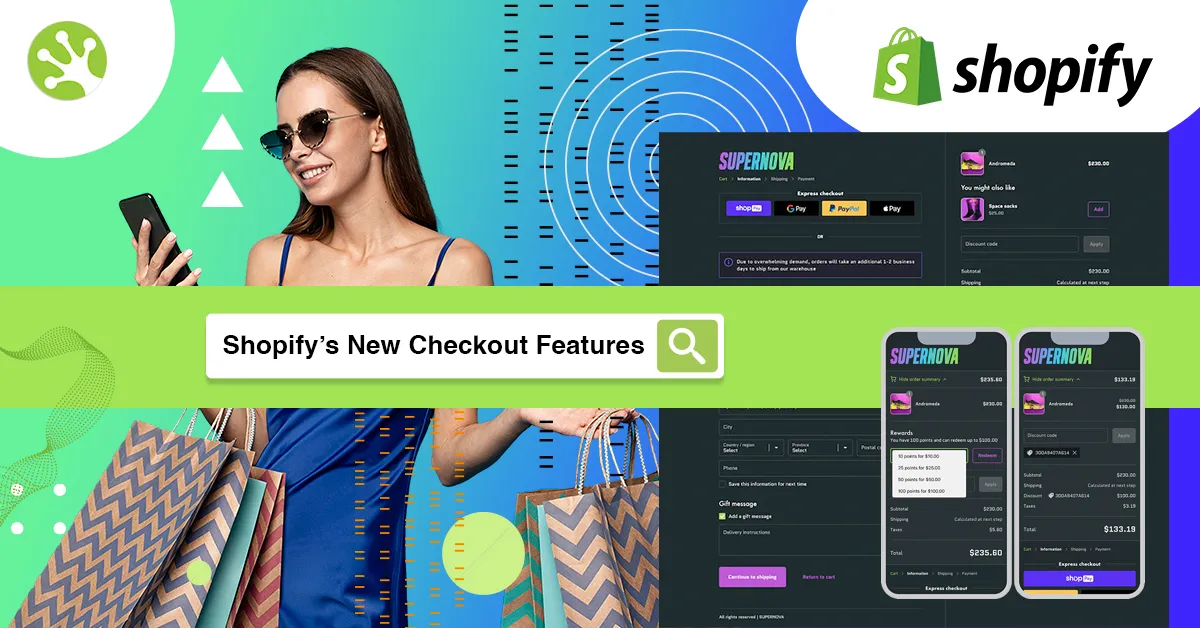
The checkout process is crucial in making or breaking your sales as a Shopify merchant. It is a crucial touchpoint in the customers’ journey that either convinces them to complete their purchase or makes them abandon their carts. Your customers’ checkout experience should be seamless, user-friendly, and consistent with your brand to provide outstanding service. However, as an e-commerce merchant, you may think that the steps in Shopify development to meet this goal should involve coding and customizing your user interface, which is daunting. Shopify understands this concern and has developed two solutions to help Shopify Plus merchants like you overcome the hurdles of checkout customization: Shopify’s checkout extensibility and UI extensions. The Struggles of the Old Checkout Process—And How Shopify Addressed Them Shopify has always allowed its merchants to provide their customers with a fast and reliable checkout experience in their shops. Shopify Checkout has become a model for e-commerce businesses in checkout ease and efficiency. However, before, for merchants to customize their shop’s checkout and make it suitable to their business needs, they had to go through a rigorous process, which was very inefficient. First, to apply their desired advanced customizations, merchants had to request access to their checkout.liquid theme file and edit the code with the help of a developer, which is quite an inconvenient process. Furthermore, the developer had to periodically check on the customized checkout features for upgrades while keeping the changes intact, making the customization process even more troublesome. To address this, Shopify created a way for merchants to personalize their shop’s checkout without working with code—through Checkout Extensibility and Checkout UI Extensions. What is Shopify’s Checkout Extensibility? Shopify’s checkout extensibility is a powerful tool as it allows Shopify Plus merchants to customize the checkout experience without coding. You can purchase checkout extensibility apps from the Shopify App Store and choose the best features for your business needs. With these new features, you can build custom fields, offer products upon a customer’s checkout, customize discount settings, display notifications at checkout, and much more. Benefits of Shopify’s Checkout Extensibility Easy Customization Shopify’s checkout extensibility allows for quick and easy customization of your store checkout without requiring programming skills, making it easy for non-technical users. You can now simply purchase the apps, choosing the features that will create your envisioned customer checkout experience. Consistent Branding What’s great about these features is that as you customize your checkout page to your desired branding settings, they automatically adapt to these, making the customer experience consistent wherever your customers choose to check out. Improved Conversions With checkout extensibility, you can create a seamless purchase experience that caters to customer needs, leading to increased conversions and consistent sales. What Are UI Extensions? Shopify’s checkout User Interface (UI) extensions allow you to adjust and modify the look and feel of your checkout page. This feature lets you create a checkout journey that precisely reflects your brand. Benefits of UI Extensions Custom User Interface UI extensions offer complete control over checkout page customization. You can tailor it to reflect your brand’s identity and delight customers with their purchase experience. Flexible Customizations With UI extensions, you can make advanced customizations, creating unique checkout experiences that cater to your brand’s needs. The new extensions also allow you to customize discount settings, whether you want to apply them only to specific products, shipping costs, or orders amounting to a certain amount. Upon checkout, customers can also quickly redeem gift cards, discount codes, and loyalty rewards points. You can also add notifications at checkout, such as a banner that informs the customer of shipping specifications for certain products, a field that allows for an optional gift message, or special offers that customers can opt to add to their purchase or payment. You also have the option to add a custom checkout message when customers buy products from a specific category or when they earn purchase points or save money from discounts. You can even build apps that help you track customer behavior at the post-purchase stage and make advanced customizations to your checkout page appearance. Customer Engagement With checkout UI extensions, e-commerce merchants can create a visually stunning checkout experience that captivates customer attention, encouraging them to complete their purchase. Why Choose Checkout Extensibility or UI Extensions? Shopify’s Checkout Extensibility and Checkout UI Extensions contribute to faster checkout and better customer experience, increasing conversions. Moreover, Shopify Plus merchants like you who want to customize your brand’s checkout experience no longer need to go through checkout.liquid and can now enjoy the convenience of flexible, creative customizations that can be upgraded safely. Choosing which features to implement just depends on what you wish to achieve with your checkout customization. Checkout extensibility is the best route if you want quick and easy customization that does not require a developer’s expertise. If you want advanced customizations that go beyond what Shopify’s checkout extensibility can offer, utilizing the skills of a developer, UI extensions are the way to go. Both features can be an excellent addition to your Shopify store. An intuitive checkout can significantly impact your store’s success and improve the customer experience while catering to your business needs. A Worthwhile Investment for Your Brand Shopify’s checkout extensibility and UI extensions are powerful tools that help you create a checkout experience perfectly suited to your business needs. You can purchase checkout extensibility apps with features catering to purchase journeys—from custom fields down to cart customization. And if you require advanced customizations beyond Shopify’s checkout extensibility features, you can utilize UI extensions to create a visually stunning checkout experience that engages your customers and reflects your brand. These features ultimately lead to increased conversions and customer engagement, making Shopify development a worthwhile investment for your brand. As a Shopify Partner, LeapOut can provide further support that caters to your shop’s unique needs as you create customizations in your shop to highlight your brand identity. Get in touch with LeapOut today and experience success in your business like never before.

Ajinomoto Philippines launches a revolutionary web app to empower Filipinos in pursuit of healthier lifestyles through nutrition. Ajinomoto Philippines is proud to announce the launch of its new web app, designed to help Filipinos achieve healthier nutrition and lifestyles. The new web app is an innovative nutrition help desk where users can get personalized meal plans and recipes based on their unique health information and lifestyle habits. The recipes featured on the web app come from Ajinomoto’s own Cookmunity website, where all the dishes are cooked with Ajinomoto products. With the web app, users get meal plans suitable to their dietary needs and preferences, enabling them to leap towards a better lifestyle. One of the most significant advantages of the Ajinomoto web app is its ability to cater to the diverse nutritional requirements of Filipinos. Utilizing this web app will improve people’s eating habits and, consequently, their lifestyle, contributing to the idea behind its creation—eating well to live well. To develop this groundbreaking application, Ajinomoto Philippines partnered with Leapout for its web and app development capabilities. In addition, Ajinomoto recognizes that for many Filipinos, there is limited access to expert dietary advice and wants them to be empowered with knowledge about nutrition. That’s why the app allows users to access resources such as personalized dietary recommendations and nutritional guidance from professional dietitians. This new web app is Ajinomoto’s way of helping them make better food choices so they can lead healthier lives. With the launch of this new web app, Ajinomoto is taking another step forward in helping Filipinos achieve healthier lifestyles through good nutrition. The application provides personalized meal plans, access to recipes, personalized dietary recommendations, and nutritional advice, all of which help Filipinos lead healthier lives. So don’t wait—create an account for free with the web app today and start eating well for a better tomorrow!
Just weeks after OpenAI rolled out ChatGPT, more and more people have been utilizing this advanced tool to automate tasks and create AI-generated text, image, video, and other content types. Being the fastest-growing web platform, it is being hailed as a dependable tool to simplify tasks at work and school as much as it is being denounced for the dangers it poses on the future of humanity. Whether we love or hate it, we must embrace ChatGPT and other generative AI apps as an emerging technology changing how we live and work. What is Generative AI? ChatGPT is one of the most widely used generative AI apps. Boston Consulting Group defines Generative AI as “a set of algorithms, capable of generating seemingly new, realistic content—such as text, images, or audio—from the training data.” It is an artificial intelligence tool that creates new and unique content, including images, music, and text. While it has many benefits, it also has some potential drawbacks that users must consider. This article will explore the cons and pros of generative AI and its possible impact on society. Advantages of Generative AI With its power to generate text, audio, and other images, this AI type is a blessing to many professionals, particularly marketers, and entrepreneurs. Here are some of the clear benefits of this technology to society: Enhanced Efficiency and Productivity Generative AI can automate tasks and reduce task time and costs. This feature is handy in industries where repetitive tasks can be time-consuming and expensive. Workers under these companies can focus more on other more impactful activities, boosting their productivity while reducing the use of resources on routine work. Personalized Content Content producers and professionals can use generative AI to create customized user experiences. This benefit can enhance customer satisfaction and loyalty, as users feel that they are receiving personalized attention. These applications can pull data and information from the dataset it was trained on to produce the most suitable content or relevant suggestions. For example, a company can leverage its social media campaigns using generative AI to create custom content targeting a particular buyer persona. Sophisticated Artworks Creative professionals can use generative AI to enhance artistic expression, leading to innovative art and music. Professionals can even use AI in the development of new products. Product developers can create prototypes of new products with this advanced tool. A good example is DALL-E, a generative AI that can generate AI-generated images. More Accurate Results Generative AI can generate highly accurate content, especially in number-crunching professions such as accounting and finance. Experts in these fields can capitalize on generative AI to produce highly accurate financial forecasts based on historical data. Companies can have more informed decision-making and better financial outcomes with more reliable results. Scalable Production Quick and efficient production of content is possible with generative AI, making companies more scalable. Marketers and professionals can benefit from this technology through fast and consistent content production and distribution to different channels and platforms. High Adaptability From the dataset it has been trained on, generative AI can produce different results from different patterns, making it highly adaptable. For example, the transportation industry can use generative AI to adapt to changing traffic patterns and optimize routes for vehicles. This modern approach can result in highly efficient and cost-effective transportation systems. Disadvantages of Generative AI While the above advantages of Generative AI can revolutionize various industries, it is not a foolproof technology that businesses can rely on. Users should note multiple risks and limitations to avoid catastrophic consequences. Here are some of them: Biased Output ChatGPT and other forms of Generative AI only base their generated content on the data they are trained on. So, if the training data is biased, then the output generated by the AI will also be biased. These results can have severe consequences, especially in industries such as healthcare and finance, where accurate and unbiased results are crucial. Lack of Control Generative AI can sometimes generate unexpected and undesirable results because it only operates using algorithms that may lack context. Your lack of control and fine-tuning makes its output unreliable. This fact can be a problem in industries such as design and marketing, where the output’soutput’s alignment with your company’s brand image and aesthetic is paramount. Intellectual Property Concerns This technology can generate content that is direct copies of copyrighted materials. This action can raise concerns about intellectual property and other legal issues. Being accused of intellectual property infringement can damage your company’s reputation. Data Privacy Concerns Generative AI lacks a mechanism for screening whether large amounts of data come from confidential sources. This issue can raise concerns about data privacy and security, especially in healthcare and finance industries, where sensitive personal information is involved. Reliance on Training Data Generative AI only pulls its results from the training data it receives. In the case of ChatGPT, its developers only trained it in data until 2021. This fact limits the generated output, leading to incomplete, biased, or irrelevant results, especially when real-time and latest information is required. Ethical Concerns Generative AI can raise ethical concerns, such as creating realistic images or videos of people without consent. Generating AI-generated photos can also pose problems in industries such as law enforcement. Using generative AI to create images of suspects can lead to false accusations and wrongful convictions. Lack of Context While Generative AI surpasses human’s ability to generate insights from data, it cannot still assess the situation where it is by itself. It needs human input to find out the context of where and when it is used for. Industries that Benefit from Generative AI In such a short time, generative AI has become a rapidly growing app that has impacted many industries. This cutting-edge technology can produce new and innovative content that can help companies streamline their workflows, improve their customer experience, and gain a competitive edge. Knowing these benefits, tech giants like Microsoft and Google invest billions of dollars in AI research startups like OpenAI to

Since the pandemic, e-commerce has been on the rise in the Philippines. More Filipinos are shopping online for practically everything. And with more businesses going online and opting for Shopify e-commerce SEO, it’s only natural that e-commerce will continue to grow in the Philippines. Certain factors drive the growth of e-commerce in the Philippines. First, a growing middle class with more disposable income means more Filipinos can afford to shop online. Second, a young population, with around 60% under the age of 35, is significant because younger people are more likely to shop online than older people. Finally, the Philippines has a growing number of internet users. According to a digital report, over 76 million internet users are now in the Philippines. That’s an increase of around 2.8% from the previous year. If you’re a business looking to get involved in e-commerce or scale your existing online store, now is the time to work with Shopify e-commerce SEO experts to achieve your goal. It pays to consider where e-commerce is headed in the Philippines so you can make well-informed decisions about improving and growing your business. Here are the top 10 predictions you should know to make your business future-ready. 1. Green consumerism: E-commerce will become more sustainable. Eco-friendly practices in e-commerce have become increasingly common. Most delivery packages today are wrapped with recyclable materials. Deliveries use bicycles instead of motorcycles. Shoppers are impressed and supportive when businesses take an extra step toward environment-conscious choices. And with the growth of green consumerism, consider making environment-conscious choices regarding the products you sell and how they are packaged and delivered. 2. Voice search optimization: Voice shopping will give way to hands-free online shopping. With Siri and Alexa simplifying many online tasks, voice search is becoming popular and may be the next step for product searches in online shops. Voice shopping will make product selection faster and easier, making the entire shopping process more convenient. Optimize your site for voice search. Use long-tail keywords, have fresh content as voice search relies heavily on this, and optimize your site for local search. Talk to our Shopify e-commerce SEO experts to learn more about these. 3. Chatbot services: Chatbots will play an essential role in online shopping. Chatbots are being refined and rapidly evolving. They used to only provide customer service by answering questions and addressing concerns. Now, they also ask about shoppers’ preferences and offer product suggestions. In the future, chatbots will become an all-time attendant in e-commerce that will see shoppers through at every stage of their purchase. Start planning now how chatbots can be integrated into your e-commerce system. 4. Augmented reality: Online sales will skyrocket from augmented reality features. Augmented reality has made it easier for shoppers to make purchase decisions. It allows them to explore a product as though they are physically present in a store. They won’t just be buying what they see but also what they experience virtually. This feature may prove crucial to your business as it inspires the trust and confidence of shoppers to choose your product. Augmented reality can boost your sales while reducing return rates. 5. Drone delivery: Packages will be delivered by drones. The integration of drones in e-commerce is still in its early stages, but it has the potential to revolutionize the way people shop online. Drones offer a fast and convenient delivery option for online shoppers, and they can help businesses save on shipping costs. While drone systems for e-commerce are still being refined, it is worth looking into as something to be integrated into your online shopping process. 6. Digital payments: More sophisticated payment options will be available, giving rise to better payment processing. Mobile wallets have become popular in making payments and are now as common as credit and debit cards. Shoppers are comfortable making online payments due to improved security as well. Eventually, payment systems will evolve further and become more sophisticated and seamless between businesses and shoppers. The potential of cryptocurrency is also largely talked about nowadays. Ensure your business is ready to adapt to these changes as shoppers grow savvier. 7. Synergized shops: Online and brick-and-mortar shops will be integrated. More online shops sprung up during the pandemic and are here to stay. Several businesses opened flagship stores on various e-commerce sites. Still, most have built their own online shops with improved systems for better control and first-party data but continue running their brick-and-mortar shops. If the same applies to your business, it is crucial that your online and in-store processes, shopper experiences, and digital marketing are all seamlessly integrated. 8. Social commerce: Live selling will evolve as social commerce continues to grow. Live selling is significantly helpful to both businesses and shoppers. Brands talk directly to interested buyers while shoppers learn more, see demonstrations, and ask questions during the live selling event. Often, shoppers also win prizes or purchase products at low prices. One of the current e-commerce trends is holding these live selling events on social media platforms. With social platforms being the main venue for big promotions like these, your social commerce must be able to catch up with evolving forms of live selling. 9. Multichannel personalization: Highly personalized shopping experience will be the norm for all shoppers. Customer service has advanced from simply addressing concerns and inquiries. It has become broader and more profound, providing customers with a highly personalized experience that inspires their loyalty to the brand. Multichannel personalization will become the norm as shopping is done through various means and customer data provides valuable insights to businesses. Hence, shoppers get a consistently positive experience from the brand. Keep your customers loyal to you by consistently providing them with this personalized treatment regardless of where or how they buy from your stores. 10. Metaverse: Digital marketing and online shopping will rise to a new level. Metaverse e-commerce platforms are becoming increasingly popular, offering a unique and immersive shopping experience. Unlike traditional e-commerce platforms, metaverse e-commerce platforms allow shoppers to

LeapOut Launches Newly Revamped Website, Geared Towards the Future of Metaverse, Blockchain, and AI-Revolution We are proud to announce the launch of our newly revamped website, crafted to resonate with the future of digital technologies. With a carefully curated design that targets Gen Z and millennials, the new LeapOut website is geared towards creating an immersive experience for visitors by integrating visually captivating design elements and well-crafted copy. “The new website has a futuristic touch to it, aligned with the latest trends in the digital landscape,” said Benedict Yee, CTO. “Our team has worked tirelessly to make the website more engaging and interactive for our visitors, catering to their unique requirements and preferences.” The website’s revamped design features captivating visuals and seamless functionality, with a stunning video presentation banner at the header setting the tone for the immersive experience. The Graphics Team has selected fonts that are optimized for readability, user-friendly, and mobile responsive, ensuring easy navigation and an impeccable user experience for all visitors. “Our objective was to make the website more appealing to the future of digital technologies, catering to the needs and preferences of Gen Z and millennials,” said Jay Alim, Lead Graphic Designer. “Our newly selected colors convey the metaverse feel, with neon green providing an accent that signifies the future of blockchain and AI revolution. Additionally, subtle animations and motion graphics represent the dynamic spirit of our young audience.” At LeapOut, we understand how essential it is to remain innovative and future-focused in the rapidly evolving digital landscape. With our newly revamped website, we’re confident of enhancing our visitors’ experience and providing them with unbeatable value.
Artificial intelligence has caused significant disruptions in the tech industry. The release of ChatGPT, AI-powered search, and other AI applications has awed, shocked, and even instilled fear and worries in businesses across various industries. Automating different workflows leads to significant changes impacting how companies conduct business. Even tech giants that once dominated the internet, like Google, are not spared by these cataclysmic changes. The search leader has recently encountered the most significant challenge in its two-decade existence. After Microsoft rolled out ChatGPT-powered Microsoft Bing, Google is facing a possible substantial blow in its operations and profitability. To counter the threat Microsoft poses, Google has reportedly started Project Magi, a move expected to significantly boost the capabilities of the world’s leading search engine. This article is LeapOut’s take on Google’s latest development and how it will affect SEO, paid ads, and other digital marketing activities. What is Google’s Project Magi? According to the New York Times, Project Magi is the name of the significant upgrade of Google’s popular search engine. Once the new-generation Google rolls out, which the company targets this May, users can enjoy a better user experience with its AI-powered features to deliver more accurate search results. As of this posting, only the NY Times report is the source of information. Project Magi will make AI more accessible online | Photo from Freepik Google Project Magi features Google searchers can expect a considerable leap in user experience once the Project Magi kick-starts. So far, the article has mentioned two significant features: AI-powered search With Project Magi, Google is expected to integrate generative AI in its current search engine, making it a ChatGPT-like interface and functionality. This upgrade lets Google anticipate users’ needs and makes Google more user-friendly while giving more in-depth search results. In his blog, SEO expert Neil Patel predicted the next-generation Google as a platform where users could interact with a “smarter version of Alexa.” This feature makes the future search experience more intuitive as if you are conversing with a human while accessing Google’s usual search function. Project Magi will enable faster and more convenient online transactions | Photo from Freepik Enable transactions Magi gives Google the power to process e-commerce transactions, allowing for smoother and more intuitive purchases. According to the report, searchers could purchase and book accommodations through this project. This feature enables financial transactions while maintaining profit from their existing Google search ads. What Prompted Google? Google hired around 160 engineers to develop the project after it experienced a significant blow with its partnership with Samsung. The search giant discovered that the world’s largest smartphone producer was in talks with Microsoft to use Bing as its default search engine. If Google would not do anything, Samsung’s partnership with Microsoft could cost Google $3 billion in yearly revenue. Samsung’s decision comes after Microsoft released the new version of Bing, which is powered by ChatGPT. After the impressive launch of this AI chatbot, which currently holds the record as the fastest-growing app in history, Microsoft has taken a solid grasp of the generative AI wars. Just months after ChatGPT’s release, the software giant followed up its success by introducing AI-powered Bing. Through Magi, Google also attempts to regain its reputation as a severe AI player following the devastating blow it experienced while introducing Bard. Future AI-Powered Developments by Google Project Magi was not the first time Google felt a severe existential threat from ChatGPT. Just weeks after OpenAI released the AI app to the public, Google started developing its generative AI version, Google Bard. But the market’s unimpressed response to Google’s lackluster presentation and glitches in the generative AI’s performance during Bard’s launching caused serious concern about Google’s capabilities in the AI field. However, as a company at the forefront of AI, Google users can expect more developments that aim to revolutionize the internet and other tech industries. The search giant recently fostered its commitment to AI research by launching Google DeepMind. Integrating Google Research’s Brain team and DeepMind, a London-based AI company Google acquired in 2014, would give the tech giant leverage in offering the latest development in many facets of artificial intelligence, not just generative AI. Some of the future developments in Google’s development pipeline include: AI-powered Google Earth’s mapping technology and music search through a conversation with a chatbot GIFI image creator that would use AI to create images in Google Image results. Tivoli Tutor is an education application that teaches users new languages using open-ended AI text conversations. Searchalong allows users to ask questions to a chatbot while surfing the internet using Google Chrome. Search will become more advanced through Project Magi | Photo from Freepik How Would Magi Impact Digital Marketing? Google’s impending upgrade can lead to significant SEO and paid ads disruption. Marketing professionals are still waiting for Google regarding Magi’s impact on its SEO algorithms and paid ad procedure changes. LeapOut is always looking for developments in Google and other companies that will impact our services. Like other digital marketing experts and influencers, we closely monitor the progress of the latest marketing technologies, especially the platforms and tools we use. Conclusion Google focuses on retaining its online AI dominance through the reported Project Magi. By hiring 160 experts to develop a considerable upgrade of its search engine, it attempts to revolutionize search by making it more intelligent and intuitive while allowing transactions to occur. Aside from these additional features, the tech giant has many reported projects underway, including AI-powered mapping, image creation, and language learning apps. Digital marketing has undergone significant developments that caused changes in the way we do business online. These improvements have also caused substantial adjustments in the visibility and ranking of web pages. So far, marketers still need to figure out how Magi will impact SEO and other aspects of digital marketing. As a multi-awarded digital marketing company, LeapOut sees to it that we always keep updated on the latest developments in the industry, especially the integration of AI to browsers and search engines
Barely a few months after its release, ChatGPT has been making waves on the internet since OpenAI launched it in November 2022. From being an unknown app, it took only one week to reach 1 million users, making it the fastest-growing web app in history. Have you wondered how ChatGPT works? What’s in ChatGPT that has attracted millions of users, including Filipinos? Would this advanced technology improve our search, discovery, and doing things? How does this app, which an unknown startup developed, has been challenging tech giants like Google and is on course to revolutionize how Filipinos and the rest of the world live and work? This article is LeapOut’s response to the myth and mystery surrounding ChatGPT and how we, as a digital marketing company, use this disruptive technology to simplify our tasks and boost our productivity. Person typing a prompt on ChatGPT | Photo from Freepik What is ChatGPT? Let us hear the answer straight from ChatGPT’s “mouth.” Below is the screenshot of the actual response I got: To make sense of this definition from a non-techy standpoint, let us dissect what “GPT” means from ChatGPT. What does GPT stand for in ChatGPT? GPT stands for Generative Pre-trained Transformer, a techy way of saying it is a chatbot that can answer any query. According to the app, GPT is “based on a transformer architecture and is pre-trained on large amounts of text data to generate human-like responses to natural language inputs.” Suppose you’re not into machine learning or AI terminologies and want to know what GPT means in laypeople’s terms. In that case, it is a chatbot with the capacity to generate responses and content the way a human does (generative) by “learning” from a considerable amount of existing data (2021 and earlier, in the case of ChatGPT) (pre-trained) using a machine learning methodology that mimics how a human brain process language, or as OpenAI put it in its FAQs about the app, maximizes “the similarity between outputs and the dataset the models were trained on” (transformer). Taken as a whole, ChatGPT is an AI that can understand queries or prompts language after undergoing training for several years and then generating a response in text content from the pool of data it has been trained on. The AI chatbot’s incredible power In just a few weeks after ChatGPT’s launch, tech giant Google, its apparent closest competitor, sounded code red, perhaps the most serious in its more than 20 years of dominance in online search. In just a few weeks, Google introduced Bard, its version of a generative AI bot. Other tech companies followed suit after witnessing the exponential rise of OpenAI’s launch of their version of artificial intelligence chatbots. From Google, other industry leaders, including social media king Meta/Facebook, Chinese e-commerce behemoth Alibaba, and Firefox creator Mozilla, joined the AI bandwagon. What is the Use of ChatGPT? What’s unique about ChatGPT, aside from being free of charge, is its power to generate “fresh” text content. Its primary purpose is to help users by generating responses to their queries in ordinary human language. It can also perform various natural language processing tasks, including translation, summarization, sentiment analysis, and language understanding. Personally, as a web content specialist and a curious student of various fields, I tried using this advanced AI chatbot to do the following: Short to long-form content ChatGPT is a boon for people struggling to write short text such as slogans, captions for social media, and meta descriptions for blog posts. Language translation This powerful app can also act as a personal translator. I tried asking it to translate a simple sentence, “I think it will rain this afternoon.” into Chinese. Here is the result: As a person who knows elementary to intermediate Chinese, its translation is accurate considering the nuances in the language. Creative writing It can also compose more creative text like marketing copies and taglines besides writing articles, blog posts, and other types of text content. It can also come up with lyrics and poems. Curious, I asked or prompted ChatGPT to write a sonnet about a beloved dog. The AI chatbot came up with this impressive result: Even though the composition is far from Shakespeare’s or Milton’s masterpiece, the AI wrote a decent poem that even an average person has difficulty writing. Coding With the correct prompts, programmers can use the app to help them with coding tasks in most programming languages. It has been trained to generate web pages and apps. Data professionals can also use this to crunch numbers and easily create visualizations. How LeapOut uses ChatGPT? In line with the company’s value of utilizing tech to provide the best service to clients, LeapOut has been using the latest online tools, including AI applications. Even before ChatGPT, the company’s content team has been using another AI app to facilitate our writing and content creation tasks. The team has used it alongside other online tools just days after OpenAI announced its public release of ChatGPT. Aside from research, we also use it for creating outlines for articles and blog posts. The app is also helpful in generating ideas for our Social Media team’s copy ideation. Its responses still need improvement, so we must conduct additional research to ensure accuracy and avoid plagiarism. Our SEO team also takes advantage of the AI chatbot’s capability as a companion to Semrush and other tools. It helps choose the best keywords to target in our campaigns and content requirements. When was ChatGPT released? OpenAI, a San Francisco-based artificial intelligence research company, officially launched ChatGPT on November 30, 2022. When prompted about its history, the AI chatbot came out with this output: Technology leaders, including CEO Sam Altman, Elon MZusk, Greg Brockman, Ilya Sutskever, John Schulman, and Wojciech Zaremba, joined hands in developing advanced artificial intelligence they claimed to benefit humanity. Its development was led by a team of AI researchers and engineers who used state-of-the-art deep learning techniques to train me on massive data. The training

Making your search engine optimization (SEO) efforts successful can be grueling, especially if you need to learn the fundamentals. To ensure high Google rankings, you must use proven work processes to boost productivity and efficiency. Here’s when you need the best practices SEO companies in the Philippines are regularly doing. What are SEO best practices? SEO best practices are tactics, techniques, and strategies to optimize your website’s content and structure. Doing these allows you to focus on the essential activities impacting its search engine rankings and visibility. While there are many methods to boost your website traffic and visibility, we have picked six that you can use immediately. You can use these simple and practical hacks even though you’re not an SEO expert, UX designer, or programmer: Colleagues discussing charts | Photo from Freepik SEO best practices for non-professionals 1. Use the correct content type that matches your audience’s search intent Knowing your readers’ user intent (what they want when searching for the keyword) and producing content that will fulfill it is crucial for SEO success. Make sure your blog post or content will serve as the right match for your target audience’s search intent. There are four types of search intent: Informational – when someone wants information or wants to learn about various things Navigational – when a person wants to reach a particular page or website Commercial – when a searcher wants to know more about what they want to purchase Transactional – when someone has made up their mind on completing an action or buying something One way of determining the correct content type for your target keyword is by searching on Google and finding out which types of content your audience wants to consume when searching for a specific motive. Say you are a shoe retailer. If you aim to inform your target buyers about the different kinds of shoes, producing blog posts or videos would be your best option. But if you want to sell your products, product ads, landing pages, or e-commerce pages are the best content type to create. A man typing on a keyboard | Photo from Freepik 2. Create valuable and helpful content Useful content serves your target audience by giving them what they need from you. To do this, you should research trending topics your market has already sought. From here, you can develop content that gives them new angles, insights, and data coming exclusively from you. They can come in the form of company documentation, anecdotes, images, and videos supporting your fresh insights’ credibility and truthfulness. Google has just released its helpful content update that stresses producing content that helps your target audience by providing them with your personal perspective. Besides E-A-T (expertise, authoritativeness, and trustworthiness), the search giant included another E (experience) to make your blog post, video, or other content type stand out. Let’s go back to our shoe retailer example. You can ask permission from your satisfied customers to post their images or videos while using the shoes you bought from them on your blog posts with their testimonials. Aside from making your position more relatable to your customers, it can also improve your post’s credibility and brand. 3. Make your URLs user-friendly Search engines want people to navigate the websites shown on browsers easily. Coming up with a good URL structure is one way of doing this. If a search engine can quickly locate a web page, it will be a factor in “rewarding” you with a higher ranking. Here are ways to make the URLs of your page visible: Use short and readable URLs – the more readable your URLs are for humans, the better their SEO. Include the target keyword, which will give search engines an idea about what your web pages are about just by the URL alone. Include categories and subcategories for easy navigation of your web pages. 4. Enhance the page user experience Google likes web pages that provide a great user experience, especially in design. Ideally, your company might need a qualified UX or SEO consultant to make your blog post or landing page engaging and pleasing. But you can apply some UX best practices to improve the reading time of your readers by using these: Use headers and subheadings When publishing your content, format it using the proper headings and subheadings (H1, H2, H3, etc.) Use images, infographics, and videos Visually appealing sites would make your readers glued to your content much longer. Maximize use of white space One way to enhance the readability of text and images is by maximizing white or blank space. The right amount of spacing between the parts of the page would make each of them more recognizable. A woman accessing a photo blogging website | Photo from Freepik 5. Optimize your images Images are relevant in making your landing page or blog posts user-friendly. But posting them without optimizing can slow down your page loading time, which is a red flag for search engines. So the next time you load your image, make sure to: Use the ideal image file format. Look for JPEG and PNG files with the best image compression. You can also use a WEBP file which has superior image compression. The lower the image file size, the faster the loading time of your page. Compress your images You can further reduce your JPEG and PNG image compression using online tools. Compressnow and TinyPNG are some of them. If you use WordPress or other CMS, you can install plugins such as ShortPixel (WordPress) or OptiPic (Drupal) to reduce image file size without sacrificing quality. Provide alt-text to images. Accessibility is crucial not only for people with disabilities but also for different devices where web pages are accessed. Moreover, so far, Google can only identify what the images are about by crawling the alt-text. Ensure that the caption you provide complies with Google guidelines to avoid issues. 6. Use internal links For Google, internal links – or linking words

Are you a business owner looking to better understand how search engine optimization (SEO) works? Meta descriptions are an important part of SEO, and while they may seem daunting at first, their role is quite straightforward. Meta descriptions play a crucial role in helping potential customers find your website online. Still, many fail to appreciate its importance because it can be challenging to comprehend, especially with no basic knowledge of how it works. Learn about meta descriptions and their benefits. Understand why it’s vital for successful SEO performance and how your business can decide best on your website’s meta description strategy. Gain insight into what makes up a good meta description. Boost your rankings on search engines and make it easier for customers to locate your business online. What a Meta Description Is and What It Does for SEO Purposes A meta description is an HTML element that summarizes the content on a specific webpage. This summary is essential for SEO, as it can help boost visibility in search engine rankings. Meta descriptions typically contain keywords related to the content of the page. Relevant keywords improve the chances the page shows via search engine queries. Meta descriptions also provide potential visitors insight into what they will find on the page. Meta descriptions provide a concise summary of the page content that can be indexed by search engines, with the ultimate goal of improving website ranking on the results page. This makes it clear why such knowledge can be invaluable to your business. Who wants to miss out on free organic traffic? How to Write an Effective Meta Description Attract more web visitors with a killer meta description. To start, think of meta descriptions as mini titles with keywords and phrases weaved in, accurately describing what the page is. Meta descriptions are meant to pique interest while succinctly written in 160 characters or fewer. You may initially feel overwhelmed by the different aspects of SEO, but investing time and effort into understanding meta descriptions can help you create content descriptions for your website or blog, which will capture organic search engine attention. You can also partner with a reliable SEO agency that can craft your meta descriptions and ensure website rankings with impactful strategies. Make your meta descriptions descriptive and keyword-rich Meta descriptions should be written to adequately explain your content while incorporating targeted keywords that accurately reflect what your page is about. Crafting a keyword-rich meta description can help increase organic visibility, direct searchers to your site, and establish trust with relevant web users. Keep it between 150-160 characters long Having a targeted meta description that accurately reflects your page’s content is crucial for standing out in search engine rankings. Keeping your meta descriptions within the ideal character limit of 150-160 characters maximizes your ranking potential and draws readers to your content. Try to create a more detailed message if your meta descriptions are short. Otherwise, it may seem like you have nothing to say about your content. On the other hand, it will get cut off in search engine results if it’s more than 160 characters. Working with an experienced SEO agency can help you develop effective meta descriptions that make the most of this critical element when optimizing your website’s visibility in search engines. Strategic meta descriptions are essential to every successful online marketing strategy, so don’t overlook them. Common Mistakes When Writing Meta Descriptions and How to Avoid Them Meta descriptions serve as the first impressions for potential customers. Unfortunately, businesses can make several common mistakes when writing these valuable snippets. Using default, auto-generated descriptions from webpages Default descriptions are often short or generic and must accurately reflect the page’s content or purpose. Additionally, search engines give less weight to a page’s ranking if its description matches its content. Creating unique, original descriptions is best to ensure that your meta description accurately reflects the page and is optimized for search engines. Failing to make use of calls to action within the description Another common mistake people must correct when writing meta descriptions is forgetting to include calls to action. Calls to action can effectively increase conversions and engagement, so having them within the description is essential. Aim for actionable phrases encouraging users to take the next step. This could involve signing up for a newsletter, purchasing a product, or downloading informative material. Additionally, use active language that evokes emotion and creates a sense of urgency to drive the most traffic possible. Foregoing proper formatting for keyword placement and character limitations It is important to include relevant keywords in your description to avoid this issue. Ensure it is within the recommended character limit of 160 or fewer. Additionally, format your description for readability by using concise sentences and including correct spelling and grammar. These extra steps help create a compelling meta description to drive more traffic. Ensure that the best practices for writing meta descriptions are observed by partnering with a reliable SEO agency. Working with an experienced team ensures that you stay up to date on these best practices while learning how to craft meta descriptions and other forms of web content successfully. Working with an SEO Agency for Your Meta Descriptions Working with an SEO agency to understand the importance of meta descriptions can significantly benefit your business. Meta descriptions are a crucial part of online marketing strategy as they preview what potential customers see when they come across your website in search engine results. By partnering with experts, your business can take advantage of their knowledge within the industry and gain access to valuable tools and resources that will help optimize your meta descriptions. This level of optimization ensures that your business remains visible within search engine rankings, driving more targeted and qualified traffic to your website. Understanding the Impact of Meta Descriptions on SEO Writing unique, engaging, and SEO-friendly meta descriptions for your business’ online content can be a time-consuming but worthwhile endeavor. Using natural language in your descriptions and

For business owners and marketing executives, finding out what would happen in the future results of their activities is vital. Thanks to the breakthroughs in technology, particularly in data analytics and search engine optimization (SEO), you can now have a reliable and scientific method to determine if your SEO efforts are on the right track to achieving your targeted outcomes. The ability to predict SEO outcomes based on your business’s historical data to make better decisions over time is what SEO forecasting can offer to your campaigns and other digital marketing efforts. What is SEO forecasting? Semrush says SEO forecasting occurs “when you predict future search traffic and value from SEO efforts.” It involves a series of activities, such as examining historical data from your business, industry trends, and other factors. By scrutinizing these, you can make informed predictions impact SEO efforts can do on your website traffic and search engine rankings. Using SEO forecasting tools in your marketing arsenal will enable you to develop a long-term strategy for maximizing organic traffic and rankings in Google, Bing, and other search engines. What are the benefits of SEO forecasting? SEO forecasting can allow your business to predict future trends and changes. Through these, you can make the needed changes in SEO strategies that would enable you to stay on top of your competition and continue to achieve your marketing targets over time. Here are some benefits your company can enjoy from engaging in SEO forecasting: 1. Improve your decision-making By getting insights from SEO forecasting, you can make better decisions about the SEO strategy of your business. You can predict future trends and changes in search engine algorithms that impact your company. This activity also helps your business develop a plan to enforce your SEO strategies more effectively. 2. Push for a bigger budget. If you want a bigger budget for SEO activities, you need present proof to convince them. By presenting the report of your SEO current and forecast results based on data, you have a higher chance of approval from your company’s accounting and finance departments. Colleagues brainstorming ideas about a new project | Image by Freepik 3. Enhanced client relations SEO forecasting allows you to generate intelligent data for more reliable client communication. Adding charts and other data to your reports and other business documents would better convince your shareholders that your SEO efforts give the results they want. 4. Increase your traffic and conversions Predicting SEO future trends allows you to optimize your business website and content to target the keywords and search queries your customers are likely to input on the most traffic and conversions. Forecasting helps to improve your business search engine rankings and bring more traffic to your website. 5. Improve your ROI Optimizing SEO strategy using data and insights from SEO forecasting enables your company to improve your ROI by driving more targeted traffic to your website and improving your conversion rates. 6. Enjoy competitive advantage SEO forecasting can help your business stand out from the competition by pinpointing opportunities for optimizing your website and content by search engines. This practice would increase the visibility of your site. 7. Enable long-term planning Forecasting is a powerful means to discover future trends in SEO. Using this activity helps your company form a long-term SEO strategy with flexibility that can adapt to changes in search engine algorithms. Forecasting allows your business to stay on top of the competition and maintain your search engine rankings and traffic in the long run. How SEO forecasting is performed? SEO forecasting requires a skilled individual or team with a solid skillset to interpret and gain insights from collected data. It is done through the following steps: A person working on a Google Analytics graph | Image by Unsplash 1. Analyzing historical data The process starts by analyzing your website’s historical data, including search engine rankings, website traffic, and conversion rates. This process will help you spot trends and patterns that you can use to forecast future SEO performance. a. Simple estimation To compute this, you only need to look at your current website’s organic traffic, check the exact figure from one year ago and calculate the percentage growth. Say it increased 10% year-on-year; you can use this to base your SEO campaign results on the coming years. b. Excel template For more detailed figures and accurate predictions, you can use Excel or Google Sheets for SEO forecasting. These programs have many built-in functions, so you can easily do complex calculations. 2. Performing keyword research The next step is identifying the most popular and relevant keywords using Semrush or other keyword research tools. This process will help you find opportunities to optimize your website for search engines and target high-traffic and high-performing keywords. 3. Keeping an eye on competitors Then keep track of the SEO strategies of your competitors and monitor their traffic and search engine rankings. Keeping an eye on their SEO status will help you locate areas to enhance your SEO strategy and maintain your lead over your competition. 4. Staying updated with industry trends Keep in touch with industry blogs, news sources, and social media to get updates on the latest trends and changes in SEO. This practice will help you foresee how search engines would change their algorithms and how the changes may influence your website’s search engine rankings. 5. Using SEO forecasting tools Forecasting tools, such as Google Trends and Semrush, help predict your future search engine performance and point out opportunities to optimize your website for search engines. 6. Developing an algorithm with Python If you’re tech-savvy, you can use Python to create algorithms that can crunch data to generate the needed figures for forecasting. This programming language works like a spreadsheet but can make more complex functionalities using its online library that you can use to analyze data easier and faster. Business colleagues working together | Image by Freepik 7. Building a long-term SEO strategy Now that you’ve completed your analysis and predictions, you can develop a


